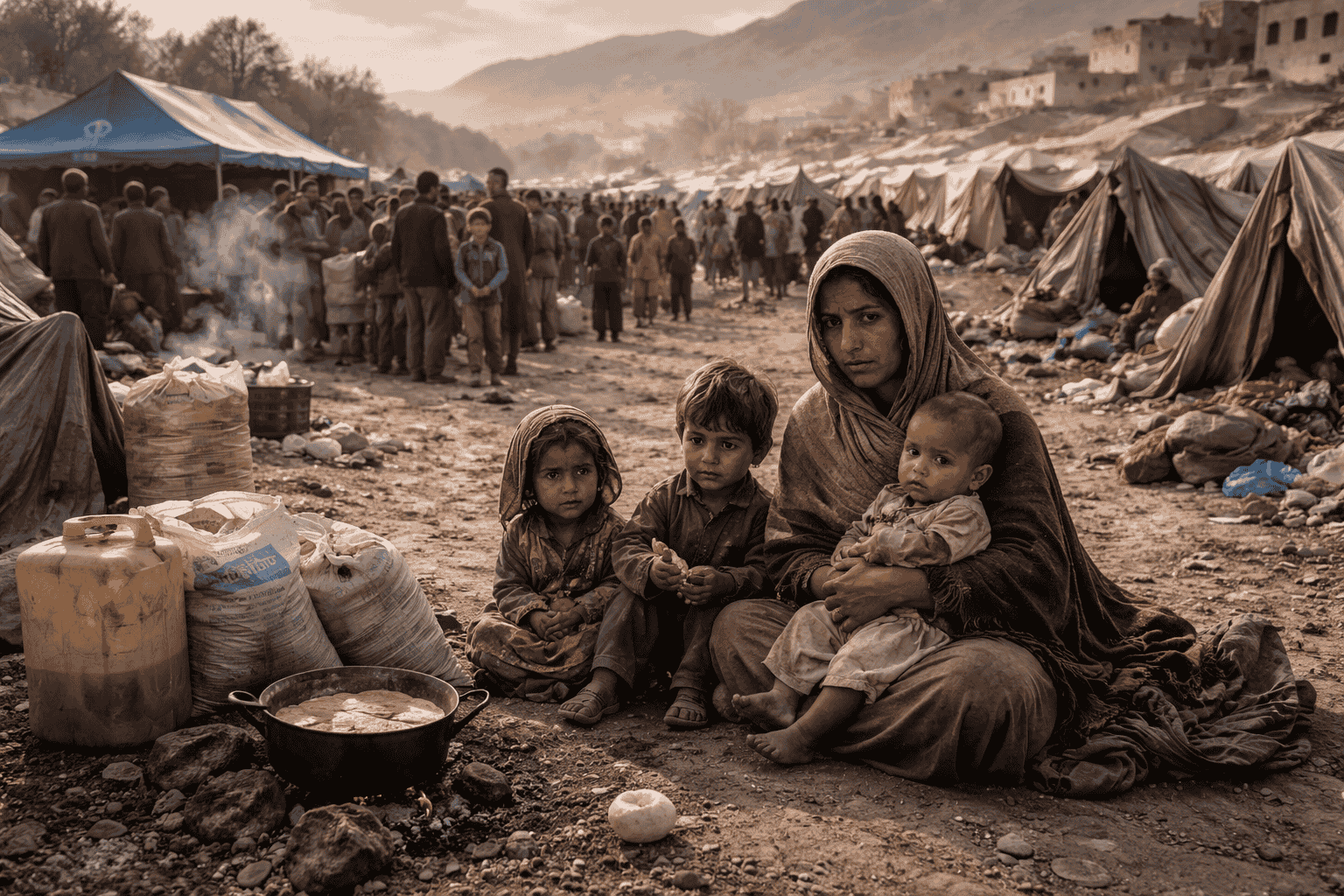
In 2025, the lives of people in Afghanistan continued to be shaped by deep humanitarian, social, and economic challenges. While some communities showed signs of adaptation and resilience, the overall situation for most Afghans remained difficult. Widespread poverty, food insecurity, limited access to basic services, and ongoing social restrictions defined everyday life for millions across the country.
One of the most pressing issues in 2025 was the humanitarian crisis. More than half of Afghanistan’s population required humanitarian assistance at various points during the year. Millions of people, particularly children, pregnant women, and the elderly, faced shortages of food, healthcare, and essential supplies. Food insecurity remained severe, with an estimated 17 to 22 million people experiencing crisis-level hunger. Child malnutrition reached alarming levels, and many families struggled to meet even their most basic nutritional needs.
Access to healthcare services was limited and uneven. Many health facilities, especially in rural and remote areas, were forced to close or reduce services due to funding shortages and lack of resources. This had serious consequences for maternal and child health, leading to increased vulnerability to preventable diseases. Access to clean drinking water and adequate sanitation also remained insufficient in many parts of the country, increasing the risk of disease outbreaks.
In 2025, Afghanistan also faced significant population pressures due to the large-scale return of migrants from neighboring countries, particularly Iran and Pakistan. More than two million returnees arrived within a short period, many without housing, employment, or financial resources. This influx placed additional strain on already limited local services, housing, and job opportunities, increasing poverty and unemployment in host communities.
The situation of women and girls remained one of the most critical social concerns. Restrictions on women’s education, employment, and participation in public life continued throughout 2025. Many girls were denied access to secondary and higher education, while women faced severe limitations on their ability to work and move freely. These restrictions not only affected individual rights but also weakened the country’s social and economic development by limiting human potential.
Poverty and unemployment continued to dominate daily life for many Afghan families. A large portion of the population lacked stable income and depended on informal work, humanitarian aid, or family support. Youth unemployment was particularly high, leaving many young people without hope for meaningful economic participation and increasing social vulnerability.
Children were among the most affected groups in 2025. Millions required nutritional support, healthcare, and protection services. Education opportunities remained limited, especially for girls, raising serious concerns about the long-term future of Afghanistan’s human capital and social stability.
Despite these hardships, Afghan society demonstrated strong resilience. Families, local communities, and informal support networks played a crucial role in helping vulnerable people survive. Community cooperation, shared resources, and the efforts of local and international humanitarian organizations helped reduce suffering, even under extremely challenging conditions.
In conclusion, the status of the Afghan people in 2025 was defined by overlapping humanitarian, social, and economic crises. Poverty, hunger, restricted rights, and limited access to services continued to affect millions. At the same time, the resilience and determination of the Afghan people remained evident. Sustainable improvement in living conditions will require inclusive political solutions, continued humanitarian support, restoration of basic rights, and long-term investment in education, health, and livelihoods.