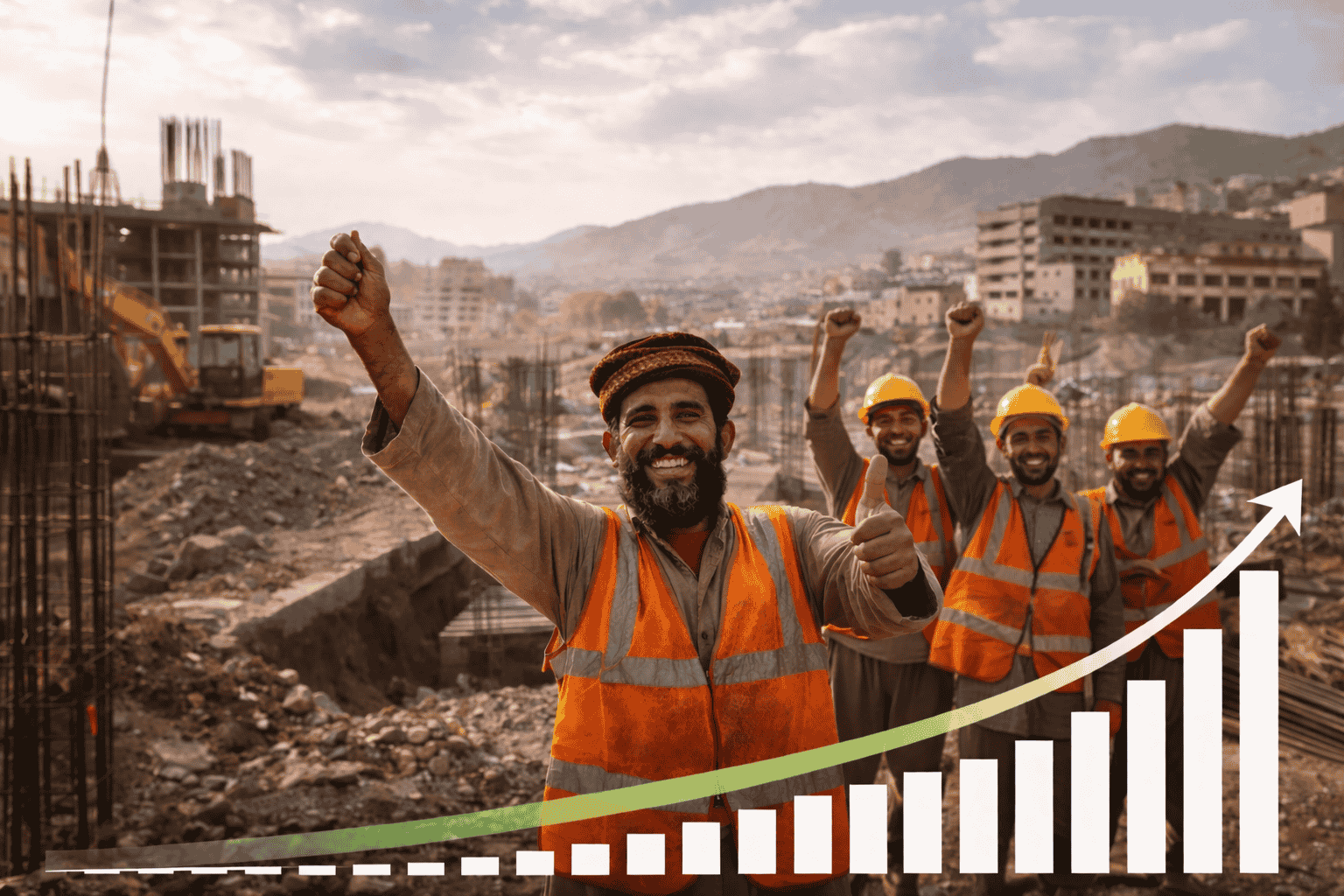
In 2025, Afghanistan’s economy exhibited modest signs of recovery after years of contraction and instability, but the broader picture remained uneven and fragile. Despite some positive indicators such as GDP growth and low inflation, deep structural challenges, humanitarian crises, and long-term vulnerabilities continued to shape the country’s economic landscape.
Economic Growth and Output
According to the World Bank’s Afghanistan Development Update, the country’s economy expanded for the second consecutive year in 2025. Real Gross Domestic Product (GDP) was projected to grow by about 4.3 percent in 2025, up from an estimated 2.5 percent in 2024. This growth was driven by increased domestic demand, particularly linked to the return of more than two million Afghan migrants from neighboring Iran and Pakistan. Their return boosted activity in services, industry, mining, and construction sectors. Agriculture, despite severe drought conditions, also showed resilience, with a record irrigated wheat harvest contributing positively to overall output.
However, not all international forecasts fully aligned on the growth rate. Some reports projected more modest growth, suggesting that the economy may expand at a slower pace. These differences reflected uncertainty caused by limited data availability and rapidly changing economic conditions.
Demographic Pressures and Per Capita Income
One of the most significant challenges for Afghanistan’s economy in 2025 was rapid population growth. Estimated at around 8.6 percent, this demographic expansion meant that GDP growth did not translate into improved living standards for the average Afghan. In fact, GDP per capita was expected to decline by around 4 percent as population growth outpaced economic output.
The return of millions of migrants, despite stimulating economic activity, placed heavy pressure on employment, public services, and housing, especially in urban and border areas. Many returnees arrived with limited savings and resources, further straining already fragile economic structures.
Inflation, Trade, and Fiscal Conditions
Inflation in Afghanistan during 2025 remained relatively low, averaging around 2 percent, which was among the lowest rates in the region. This stability was partly due to controlled food prices and a stronger local currency. However, it also highlighted Afghanistan’s dependence on imports and vulnerability to external economic shocks.
At the same time, the trade deficit widened as imports continued to exceed exports, underscoring persistent external vulnerabilities. Domestic tax revenues improved and were expected to reach about 17.1 percent of GDP. Nevertheless, this increase was insufficient to compensate for the sharp decline in external grant assistance, leaving the government reliant on trade-based taxation and donor support to maintain fiscal stability.
Labor Market and Structural Barriers
Unemployment remained a serious structural challenge in 2025, with youth unemployment particularly high. Nearly one in four young Afghans was estimated to be unemployed, limiting economic participation among the rapidly growing youth population. Restrictions on women’s participation in the labor market further reduced human capital and weakened potential economic productivity.
The banking and financial system also remained fragile. Weak regulatory frameworks, rising non-performing loans, limited access to credit, and widespread use of cash outside the formal financial system hindered financial inclusion and private sector development.
Humanitarian and Social Context
Beyond macroeconomic indicators, the humanitarian situation in 2025 was severe for many Afghans. Millions faced acute food insecurity, with a large share of the population relying on humanitarian assistance to survive. Assessments indicated that more than half of the population required food aid during parts of the year, and malnutrition, particularly among children, reached extremely high levels.
Other reports pointed to widespread poverty and unemployment at the household level, further deepening economic hardship and social instability. These realities highlighted a significant gap between official economic growth figures and improvements in the daily lives of ordinary Afghans.
Outlook and Future Challenges
Although economic growth in 2025 suggested some momentum, experts emphasized that sustainable improvement would require deep structural reforms. Key priorities included strengthening private sector development, increasing domestic revenue mobilization, improving governance, diversifying exports, and enhancing financial intermediation. Inclusive policies that enable broader participation, especially for women and youth, were considered essential for translating economic growth into tangible improvements in living standards.
Continued international engagement and reliable humanitarian and development assistance remained crucial for easing humanitarian pressures and building long-term economic resilience.
Summary
Afghanistan’s economy in 2025 showed modest growth amid significant fragility. While indicators such as GDP growth and low inflation pointed to limited progress, structural challenges including rapid population growth, unemployment, trade imbalances, and humanitarian crises continued to overshadow economic gains. Long-term recovery will depend on deep reforms, inclusive policies, and sustained international cooperation.